NUGGETS of LIFE: To be happy with yourself, what greater success!

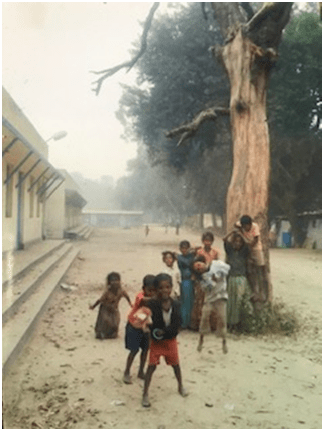
Children at Delhi Slum

One of our house helps is unusually intelligent. She had just turned 19 when she joined us. I know her since the days she went to school. She would often come to visit when her elder sister was working at home; always happy to show me the medals she won in her academics and kabaddi. But years later, the day she joined, did I realise she had dropped out of school somewhere in between and contrary to my high hopes, never entered college.

While we were pulling out some fresh veggies from my kitchen garden, I started a conversation with her about something that had long intrigued me. I wanted to know why she did not continue her education. Was it due to lack of funds? Or, were her parents against it? I wanted to know if she had any particular dream or what she wanted to become. My concern grew because here was a young girl whom I knew when she was even younger and was certainly a bright student.

Not stopping her hands at work she smiled and replied calmly, “Kuch bhi ni didi. Bus jab shaadi ho jayegi toh ghar ka kaam kar lungi. Parhai toh saari zindagi kar sakte hai, ghar kitaaben laakar. Parna aana chahiye. Reema (her younger sister) doctor ban na chahti hai. Mai toh ese hi khush hoon” (Nothing, I’ll get married and do household work. One can study at any time, only one needs to be literate. Reema, my younger sister, wants to be a doctor but I’m happy just like this).

 I smiled. It had been a long time since I last met someone so serenely self satisfied and content. And her answer took me years back and reminded me of Suraj.

I was studying at Miranda House in Delhi then and those were the days of Common Wealth Games in the national capital. Hence a massive number of labourers had migrated to the city. As a part of my college outreach program, I went and taught children in one of these slums in Delhi where I became good friends with a bunch of kids and Suraj was one of them.

He was a young boy of 9 or 10. After completing their daily learning activities, all would pep up Suraj to sing and bravo what a jolly smooth voice the little one had! Though I never understood what he sung since it was in a Rajasthani dialect, it certainly was warm and joyous. Whenever I encouraged him saying, “Tum toh bareh singer banoge” (You will become a famous singer one day) -he would shyly reply that he wanted to become a mason like his father and singing is just to have a good time.

His answer too reflected nothing less than integrity and self respect. We, the privileged have a different looking glass for these children. Some of us feel sorry for them, some others empathize with them. But no, they need none of it. They are proud of who they are, how they are and much happier than most of us.

Just then my maid tapped the basket on the walking path to sift away the soil. “Didi ander chalen” (Do we go inside?) – she said with a radiating face after she was done pulling out the turnips. As we walked back, I was reminded of the lines by actor and poet Arunoday Singh – “To be happy with yourself. To be worthy of yourself. What greater success, could you possibly find?”

Published in Hindustan Times on 2/3/2020

OPINION: THE ECHO-BEEP!

Is an environmental apocalypse approaching India?

The warm and majestic green landscapes, the glory of the snow crowned mountains, the pristine maiden rivers and lakes – can soon be a matter of history! The clarion bells keep ringing over the degradation of various flora and fauna, and now things have got only graver. The very topography of our land has got altered, rather plundered! Thanks to the human rat-race.

The Irony

Being an adventure seeker, I have been visiting various places especially across the Himalayas and it pains my heart every time to see the deteriorating condition of these places. The beautiful pockets of nature are being replaced by plastic bottles, litter, dams, rapid construction, luxurious hotels and resorts – making these areas dull and grey! The irony of the situation is that the luxury and modernization that we are trying to achieve from such rampant dissection of these ecologically sensitive areas, is absolutely menacing.

The Devastation

We need to understand that things are not so smooth anymore. Clearly, there is an increase in the occurrence of natural calamities now. Man has been reckless in the past decade – ignoring guidelines, exploiting natural resources and taking full advantage of the political bureaucratic nexus! It has aggravated the estimated dire consequences to the pinnacle. Development is taking place at the price of the destruction of nature. The spoilage of the Dal Lake causing the locals to abandon their means of livelihood, the soil erosion due to flooding of the Brahmaputra, loss of life and property due to floods almost every few years in Assam and the recent devastation in Uttarakhand testify the above mentioned fact!.

Beep-Beep!

Not only within the country but all across the globe, there is a drastic change in the climate due to devious human activity, thereby altering ecosystems callously. The tsunami in Thailand, the hurricane Katrina and the Sandy Storm in the United States are to name a few. There is increase in population and decrease in natural resources. Today deforestation and global warming have reached to such a level that there is a constant environment alarm beeping, via natural disasters. According to the United Nation Secretary-General Ban Ki-moon “we are close to a 6 degree increase” in global temperature (at the Council on Foreign Relations; February 2013). If this is the current path then may be sometime henceforth, the polar ice might be thin enough to float, triggering a colossal chain reaction of collapse!

Call for action…

It is high time to protect our environment.  The power and beauty of the natural world cannot be tamed – man is a fool to do so! There is much said and written in this regard but it is high time to pull up our socks. Little things of common sense can go a long way in making a difference. For instance, using buckets and pails for bathing is better than using showers, turn off your vehicle’s engine at red light, reuse and recycle, use eco-friendly products or reduce the flow of water when washing something. Another interesting concept to save our environment is using creativity as a tool to fix the problem. Great creativity can make something out of nothing, a monotonous idea into a great novelty!  We need to think differently and out of the box, thereby attracting and involving the human mind to do various things to save our environment. This increases the power and effort in this direction manifold, with the streak of enthusiasm.  

Apart from this, green societies should be given impetus. These are an association of persons, business and organizations that create local and global support systems developing sustainable resource based communities. Grooming green societies is grooming culture of optimum utilization. Last but not the least, both our centre and state governments should not merely provide financial help but also devise an adequate plan and policy. A workable solution is the need of the hour because – TO MOULD HISTORY OF OUR FUTURE, WE NEED TO HARMONIOUSLY MOULD THE ENVIRONMENT OF OUR PRESENT!

Cover Feature article of Identity India magazine in its September 2013 issue

SUNDAY FEATURE : Sangla Chitkul – The Ultimate Retreat

With the scorching sun, parched landscape and ever thirsty air – it is indeed a fortune to travel to areas of extraordinary beauty in the picturesque Himalayan range, splattered with glaciers and turquoise blue lakes, rivers and streams. Travelling to remote areas is always thrilling but only a few offer adventure and spirituality with the aroma of love. And Sangla-Chitkul proves to be one such perfect summer retreat package!

En route

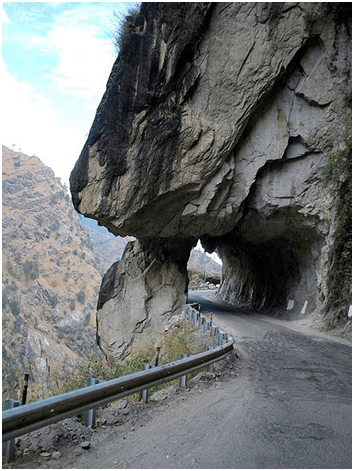
On the way to Sangla, Shimla can be the first stopping point. Tour around the famous mall with its church and mock Elizabethan architecture to sink in the city’s feel. Sangla is a ten hour drive from Shimla. Sangla and Chitkul are in Kinnaur district of Himachal Pradesh. Kinnaur is a land of legends and is bestowed with the choicest bounties. It has the Great Himalayan range and the high Dhauladhar ranges surrounding it. The road is good for most of the journey up to Rampur except for few stretches in between and is fairly decent up to the valley. While en route to Sangla, apart from the serene views there is a huge statue of Lord Hanuman which is awe-inspiring with the beautiful mountains in the backdrop. It is built in a temple compound on the side of the road after crossing Rampur and is quite eye catching. The journey can take on the spirits but it’s worth the ‘heaven’ in close proximity.

Hindustan – Tibet Highway

The redolence of Love and Spirituality

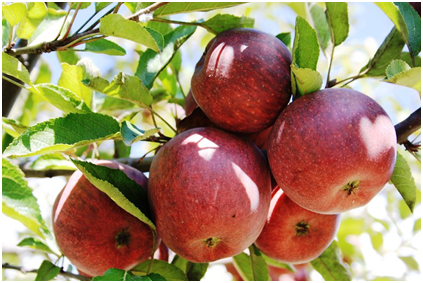
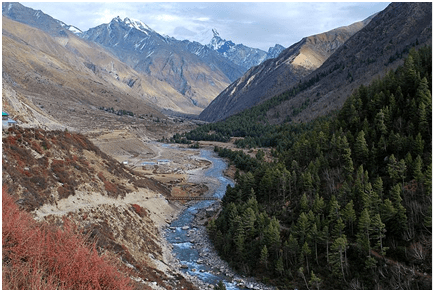
Sangla Valley is also called Baspa Valley. It follows the 95km long Baspa River which gives breath taking view. The valley is a remote area with nature in its pristine form and a romantic enchantment that is un-ignorable. Saffron fields, cumin crops, apple and walnut orchards fill the valley-rendering the air with love and passion. The road climbs the steep slopes giving way to beautiful alpine meadows.

The scent of apples in the air is overwhelming

Sangla is the largest village in the area and is situated on the hind side of Kinner Kailash range. It is built high on a slope with the village houses rising in tiers. The local people have a distinct Kinnauri dialect and culture. The fruit, the charming faces of Kinnauri women, music and rhythm of the Kinnauri community life are irresistible.

Kinnauri women in their traditional attire

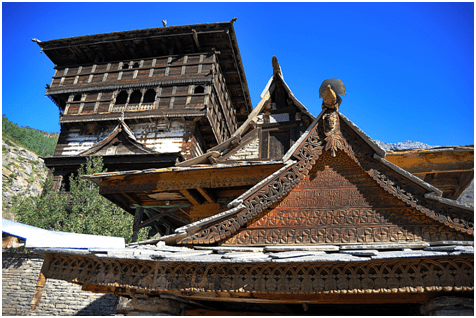
 It is here that one gets to see and experience the subtle mergence of Hinduism and Buddhism. Nag Temple and Devi Maa Temple are typical examples of this amalgam in the valley. The Nag Temple is also central to the flamboyant Phulaich Festival – ‘The Festival of Flowers’ which is held annually in September. The villagers from around the place get together at the festival. They dress up in colourful clothes and sing and dance under the trees. It is a splendid experience and a real feast to the eye and soul! The village of Kamru, situated about two kilometers above Sangla, can also be visited for the temple of Kamayakha Devi. The castle like temple has the idol of the goddess Kamayakha brought from Assam centuries ago.

Kamayakha Devi Temple

The last village

Chitkul can be reached via Barseri and Rakcham. Barseri is a green valley in the midst of barren surroundings. Immediately above the village of Barseri is Rakcham. Here the valley widens and the road passes through wooded hillsides. Finally, Chitkul is the last village on the old Hindustan –Tibet trade route. It is also the last point one can travel to, without permit. The road does not lead to the border but closes around 90 kilometers before it. The rest of the area is under the control of Indian Parliamentary force ITBP.  

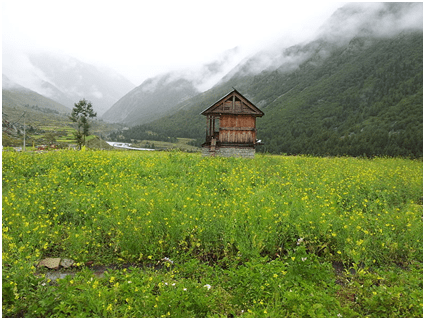
A wooden hut at Chitkul

Of particular interest at Chitkul are its houses, with either slate or wooden plank roofs, Mathi Devi temple, a small tower and potatoes (they are famous for their distinct taste and texture; and the high price!)

The Mathi Devi temple is apparently the oldest in the valley and has beautiful pagoda style architecture. The place evokes feelings that are hard to define in earthy terms. The small monastery at Chitkul has a highly valued, old image of Sakyamuni Buddha. There are four statues of directional kings on either side of the door, as well as a wheel of life.

Trekkers’ call!

For those who are fond of trekking, there is a beautiful trek up the Baspa from Sangla through Chitkul to Dhumti. A trek to Nagasthy up to the last Indian post is also a good option if with family since it is easy and flat. The 1,000-year-old Rekong Peo, known for the chilgoza forests, the Nako Lake and the Kalpa valley are just 55 km away and definitely worth a visit. One can also trek to Yamunotri, Harsil or Har-ki-dun directly from Chitkul but these are difficult treks requiring thorough preparation and proper equipment.

Baspa river flowing next to Chitkul

The valley is considered one of the most beautiful, astonishing and spell binding in the entire Great Himalayas. Trekking or hiking across it is a gift in disguise. One feels more than eyes can see! It’s a place where waters meet below, while snow capped mountains touched the sky. It’s a place where a wandering traveler could find solace.

FACT FILE

Best time to travel: May to October is a good time to visit but April-June and September-October would be the best. Avoid during Dusshera and Durga Puja season!

Climate: It is cool but nevertheless it might get chilly even in summers so do take some woolens along.

How to reach: Chitkul is about 255kms from Shimla. Follow the NH22 till Karchham via Narkanda, Jeori and Rampur. At Karchham, take a right diversion and go via Rakcham and Sangla to reach Chitkul.Where to stay: There are a few hotels and resorts. Also, booking can be done at the HPPWD Guest House.

Published in Hindustan Times on 24/6/2013