NUGGETS OF LIFE : Mirror O’ Mirror

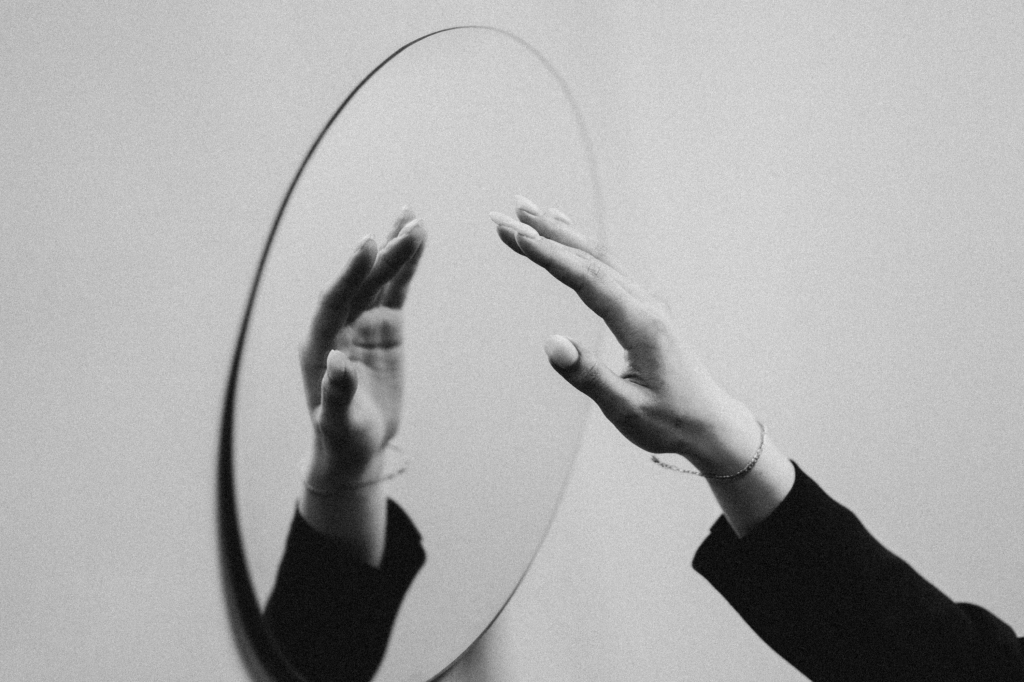
If Alice did not fall through the looking glass, and if Snow White’s step mother had not asked the magic mirror on the wall – the stories we live by would have been different. What was instrumental in the deep inversion of lives of these characters was none other than the mirror.The mirror – a portal, a reflector!

Often we don’t pay attention to the kind of mirror we inadvertently end up using in the larger story of our life…
The symbolic mirror held up by a good friend who opined it’s “too early for grey hair”, or the mirror held up by the cousin who believed “salt and pepper, always so classy.” Or the mirror of our dressing room where each morning our gaze greets our gaze and opines “You do what you do!” But what if the mirror is distorted? Like the convex and concave mirrors at the famous Rock garden that entertained my little one and her friends evoking amusing little moments of carefree laughter. For a moment we were bulging outward with long necks like a Brachiosauraus and the next we had eyes popping out like some alien from Mars. And what if the kids really believed that is how they looked. Perceptions and reflections go deep hand in hand, don’t they? Just like the fact that the letters don’t get reversed in the mirror, it is us who flip the letters to read it in that mirror and eventually end up reversing them but the mind believes otherwise.

Thinking of mirrors, I couldn’t help run through vignettes of my memory when I was a kid or should I say the time in sepia for all of us when an entire generation believed in covering the mirror of the dressing table with a sheet or have flap doors on the sides of the portable dressing tables to open and shut the mirror as and when wanted. Were mirrors considered superstitious or magical in their era? Or was it a simple cord cutting between their everyday movement in reality and the world of illusion they could conjure up in their time of leisure perhaps while putting up the bindi or tying the turban.

Mirrors can certainly evoke strong feelings and provoke imagination. No wonder why mirror gazing has become a popular meditative therapy. Simply sit still and look into the mirror. It will either calm the nerves by bringing you into your present or release your inner emotional turmoil in a gush of tears. After all, there is an innate desire in us humans to be seen and mirrors do exactly that. However, they have another Freudian side to it as well when they act as a self portrait that we humans like to project on the outside world. Perhaps,the same psychological fundamental that has addicted the next generation to social media.

Talking about social media, don’t you think dear reader that it is the real magical mirror that should be ritually covered with cloth?! Because logging out has failed to keep people away from it! How we love to tune into our faces; sharing and oversharing our lives in a metaverse that tip toes on a thin rope of self and construct, narratives and counter-narratives. It certainly makes for a far more fancy, complex and interesting mirror that humankind has ever had (in Freudian sense and otherwise).

And I honestly cannot help with the wonderment of what Alice’s experience would be like if she falls through this new looking glass! A dimension yet to be completely explored.

SUNDAY READ – Through my eyes: A city at the cusp of change

If I can correctly recall the first memory that I have of Chandigarh as a preschooler, it would be watching a centipede creeping up one of the pillars at the Rock Garden’s main entrance. Somebody from the family turned around and warned me, “Stay away!  It bites its way into the body through the skin”. That is it. I do not remember marveling at anything else for the rest of the day ; walking around the garden, I was just looking out for any centipedes. Besides, I also have a vivid but somewhat compact memory of sector 17 market plaza. Vast.  All concrete. Only a handful people walking around. A softy corner. Pink scoop of ice cream on an orange cone.

Fading Frames of Sepia

As I grew in years, so did Chandigarh. By the time I was a teenager it had transformed into a completely different city. I would sometimes visit my cousin in this city during my vacations and the impressions made were different now. Straight roads. Rows of trees that looked like big green umbrellas. Art deco houses. Stucco wall at the façade of some. Books and art for evening conversations. Accompanied by tad bit small talk for some refreshment. Us cousins giggling somewhere in the corner.

 Surely, it was a sophisticated, progressive and slow lifethat most led living in Chandigarh, which was being shaped and altered by the presence of some of the top educational institutes of the region.  Although I sometimes think that running and streamlining the economics of the city must have been a major labor in its initial years. But then it was the capital city of two states and the government, the main employer, served as a form of back up from an economic perspective. Having said that, I know some of the families who settled here in the city’s nascency, who would often tell that their private investments were one of the biggest risks they took in their lifetime; for no one believed how businesses would thrive in the vast emptiness here that was mostly covered with mango orchards.

 Little did they know that this risk and uncertainty would turn out to be the best decision of their life. Over the years, the small sleepy town had turned into a major city, an urban agglomerate that is now at the cusp of being a metropolitan.

A Perfect City?

In 2015, architectural critic and writer Jonathan Glancey declared in an article for BBC that “Chandigarh is the only successful perfect city in the world.” But with greater recognition, if I may say so, comes even greater responsibility, right?

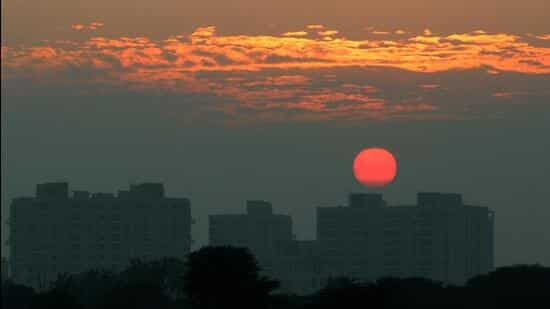
Now that the preschooler has grown into an adult and this urban agglomerate has become a home, I get to witness and feel this same city in a different way. Perhaps like any other city in its rapid strides would feel like. So, I see the same big green umbrella trees, but now they shade massive traffic jams underneath. There are fewer tete – a – tete at home and more ‘catch ups over coffee’ and mummy- papa turning 40 birthday bashes outdoors. It is not merely a ‘pensioner’s paradise’ anymore. The population is much diverse, on professional as well as cultural front. Art deco houses are now renovated into French maison de maitre or modern cubist residences. There are now beautiful stretches of scaling skyscrapers, but sadly, they stand next to huge garbage landfills. Some of the city’s waste disposal plants are lying defunct. According to Swachh Survekshan 2022, Chandigarh has come down to 12th position in matters of cleanliness and efficient waste disposal.  The National Crime Records Bureau (NCRB) report, meanwhile, showed a 23% rise in rape cases, and a 10.68% in crime against kids between 2021 and 2022.

The truth is that every emerging metropolitan faces such set of challenges but there is always a solution. The need of the hour is a collective effort towards making the city great again from administration and the city’s own. Chandigarh has always been clean, green, well organized, we just need to go back to the roots. The vibe of the city has always been a strong stimulant for the people here. And I hope it continues to be so.

Published in Hindustan Times on 19.03.2023

Nuggets of Life: Journey back in time, reliving romance of NH44 in Punjab

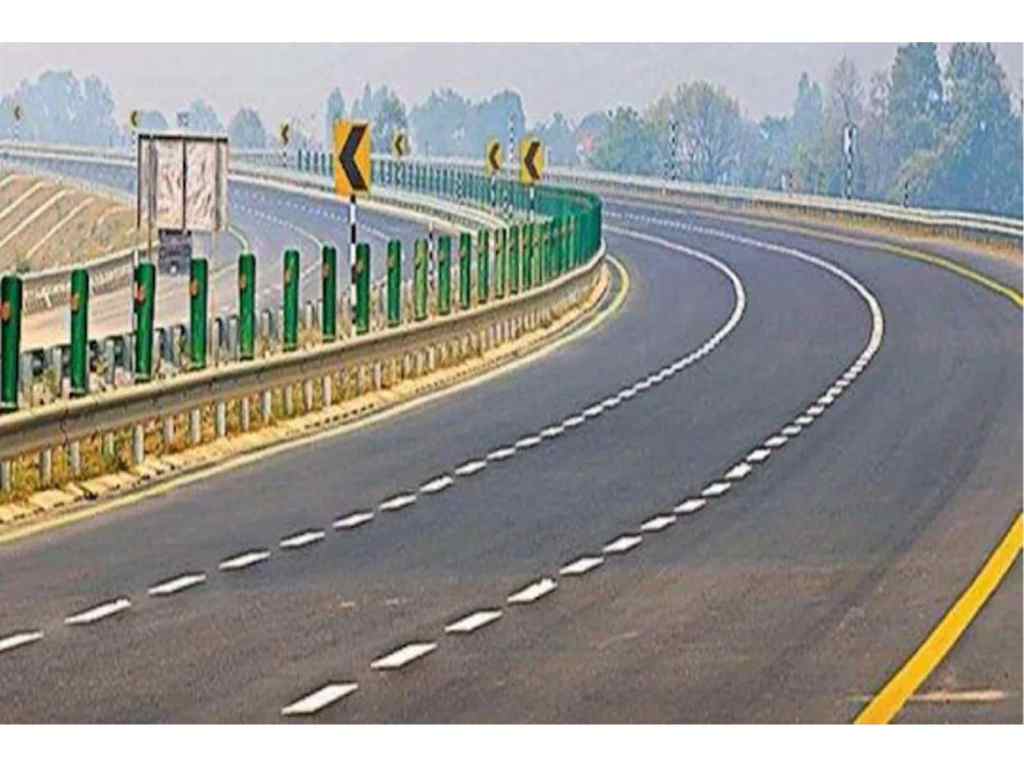
The past few months involved a lot of consecutive travelling to and fro the length of my state Punjab for personal reasons. I mainly travelled on (NH) 44. On my first visit, I paid no attention to whatsoever bus, truck, city, or animal I passed by while I travelled. All I wanted to make sure was to reach my destination on time. On my second and third travel, I mainly went on complaining about the road work still under progress that created massive traffic chaos near Jalandhar Cantt and Raiya further ahead.

It was sometime on my fifth visit, when all the fussing was done and the road started to feel familiar, that I sat back and looked outside and this historic highway completely romanticized itself in my mind.

G.T Road I remember everyone addressing it as and not just an expressway how we see it now. I wasn’t sure if this expressway still was the exact GT road so I asked Guru Google and yes it turned out that the old Grand Trunk road to this day coincided with NH44 and NH3 in Punjab. This was the majestic GT road whose foundation was laid by Chandragupta Maurya and dated back to 3rd century BC. The ancient trade route about which even Kipling said, “It is to me as a river from which I am withdrawn like a log after a flood.” And here I was travelling on the same route.

As we crossed one city after the other I noticed how patterns and structures changed alongside the highway. Ludhiana and Jalandhar were the two main cities that fell in the way of NH44. It was interesting to note how the overhead water tanks changed from city to city. They were more ‘box-like’ in the Malwa region, while they mostly consisted of footballs and airplanes in the Doaba area and consisted of lots of eagles in the Majha. It amazed me how this highway exhibited and explored the diversity, cultural values, expectations and hopes of cities or regions that came under its radar, as one traversed  through it.

Another impression of NH44 that stayed with me was when we entered Kartarpur, a small retro reflective yellow sign board caught my sight. It said: Welcome to the historic city of Kartarpur. I’m sure it must have been here all these years but this was the first time I saw it. And despite knowing that Kartarpur was associated with Sikh and Punjab’s history, reading the sign board for the first time hit me different. Then there was the Jung -e – Azaadi War Memorial that stood their magnificently honouring the courage and strength of Punjabi soldiers who laid their lives for India’s independence. It was as if pages of history flipped one after other as I passed one milestone after the other on this highway, defining my state and national identity.

Eventually my four and half hour long journey on this mostly smooth highway, interspersed with picturesque green fields as well as encroaching concrete buildings, turned out to be nothing less than a road narrative which created a romantic dialogue in my head all the way; where my mind and heart discussed who we are, what are our values and where does our history go from here on.

Published in Hindustan Times on 3.1.2023

NUGGETS OF LIFE: The Tiffin Saga

The times change and so does the content of these little portable boxes packed with food, but it is interesting to note how its varied roles never change.

Each morning I switch on my daughter’s zeal for school by alluring her to solve a riddle. The riddle of what is inside her tiffin. I would tell her that I have packed a yellow crescent moon with tiny red hearts while combing her brown curls. Well, at times her conjectures are right while other times they are not. There is always a mother’s urge compelling me to reveal the secret and put her to ease but I purse my lips and hold back until she finds it out on her own in the class.

I am sure it is tiffin time she must be looking forward to with all her heart. Not so much because of the food or the hunger pang but the grand revelation – the answer to what’s inside her tiffin. It’s mostly fruit and nuts. She knows that well and proudly tells everyone that she is a ‘fruitarian’ except on one occasion when she went and asked the cook why he does not pack burgers and pastas for her. He politely sent her back to me with ‘ask mama’ statement for an answer. I tried to explain her the ill effects of junk food, yet to keep her heart, I gave her once a week junk food day concession for her tiffin.

But sitting in my room I thought to myself that the peer pressure had already begun at this tender age. I imagined red, blue, pink, round and rectangular, Spiderman and Frozen, tiffin boxes being opened during the food break and burgers, pizzas, muffins and pretzels shimmer through as the lids are removed.

This took me back to my school days when we friends would open our tiffin boxes. Potato patty, spinach parantha, dhokla, parantha with mango pickle, veggie sandwiches, home baked cookies, cold coiled maggi were our generations thing. Although to this day, with a giggle in my head, I do not understand how cold maggi in our tiffin was a happy thing back then! Tiffins were always shared. Each time everyone liked the other person’s parantha or pakora more than their own stuff and a sense of bonhomie prevailed.

The times change and so does the content of these little portable boxes packed with food, but it is interesting to note how its varied roles never change. They are snugglies for kids which give them the warmth of home in their classes. They are a box of rest and pause in a busy man or woman’s day.  They are comforting connection to cultural heritage for people working in foreign lands. They are a travelers box of security. A dabbawala’s bread and butter. A laborer’s box of well being. A wife’s box of love. A mother’s prayer. A cook’s art.  

Anyway, my role is duly accomplished every day when my daughter comes back home and gives me the answer to the morning riddle. Much to my happiness and peace of mind I would then know that the tiffin box is empty now.

Published in The Post India on 31.10.2022

SUNDAY FEATURE: THE MANGO MANIA

For the love of mangoes!

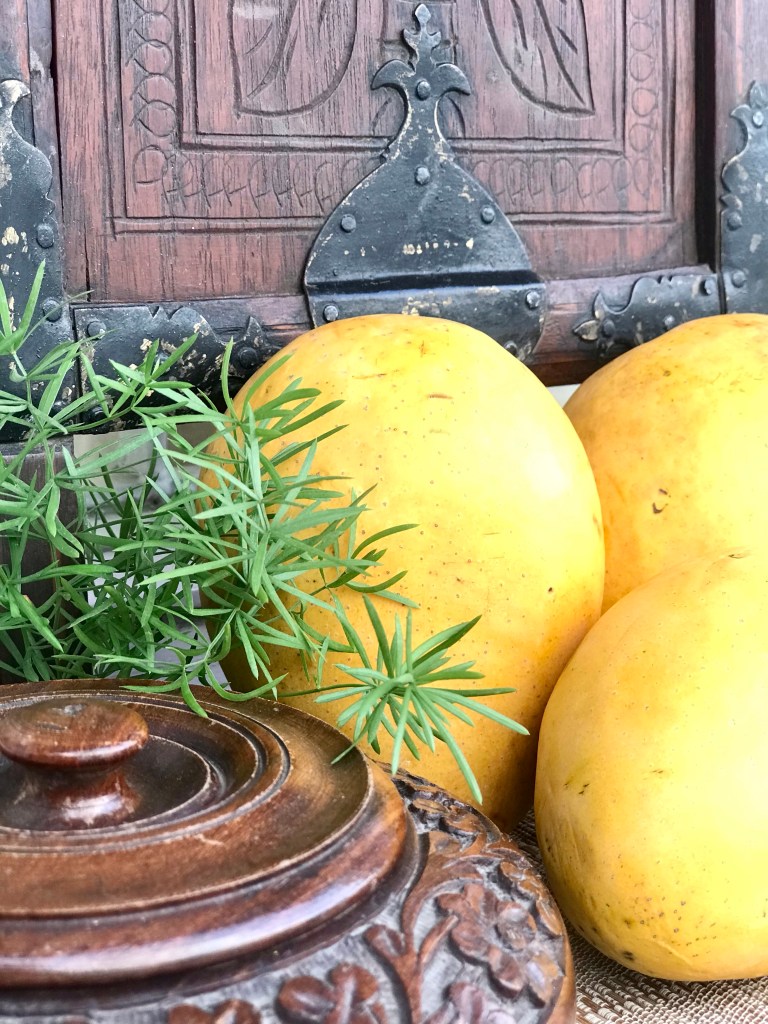
So, clearly it’s that time of the year when sun is very – very sunny. Drool for the pulpy – splashy yellow colour that satiates the taste buds…err…sorry – I meant the eyes! A friend of mine has a PhD in food processing something. You know she’s very intelligent. She told me that a new era has dawned for mango lovers, with the formation of chemical ‘X’ – perhaps, carbide calcium… calcium carbide something – any way the well read people call it chemical ‘X’. According to her, only those mangoes are the healthiest and tastiest those are cuddled and caressed with the love of chemical ‘X’.

Of course! The kind hearted woman that she is, she spread this word everywhere for the welfare of the people, by publishing her articles on the hot topic. I tell you this topic was much covered in almost all the national dailies. Certainly by the time mangoes arrived in the market, people were very well informed. They went in hordes to the vendors. How delicious the mangoes looked! Bright, beautiful and golden yellow with unique patches of green, unlike the monotonous blending of yellow and green (that’s so organic). Therefore, most of my friends had interesting stories to share.

Obviously since they had read the articles, they definitely had to go and buy those chemical ‘X’ kissed –other worldly pieces of work. So, one of them who has a big family told me that her father brought boxes of mangoes one day. The family had a lovely evening in their garden while enjoying the mangoes, dipped in the big buckets full of water. While relishing mangoes, not two or three but six or seven, her eldest aunt got so ecstatic that she ended up dancing high with blood pressure and spent the entire night under shower. Of course, so that she can save on bathing the next day and begin with her mango mania again. Such is the love!

Another one told me, yet more benefits of these new mangoes in the market. Since she was expecting her first child, she wanted to eat the healthiest fruits; and mangoes were her favourite. Her busy doctor was very strict about her eating habits and would monitor her babys health every month. And oh my! How my friend would always fret over getting appointments with her doctor. Since the doctor was so busy, she would keep my friend waiting for weeks. However, this time the miracle happened! After eating a few slices of mango, apparently the baby kicked the aamras out (I think in the form of a mucky material through the mouth) and my friend landed an appointment in the surgery, the very next hour. Such a help for getting appointments with the doctors!

For my concerned reader- she had a baby boy – he is fit and kick ass.

Last but not the least, when I was a kid, my maali uncle told me while pruning the mango tree, that when Baabar came to India – he did not know how to eat mangoes. But when he tasted one, he fell for the charm of aamras and fell in the spring of never leaving India.

 Well, I was just thinking… he should have rather tried the chemical ‘X’ ones!! Perhaps, a different spring would have emerged.

NUGGETS of LIFE: When the New meets the Old

Art is just used to depict those emotions.

When I recently visited my parent’s house, my mother took out a stack of yellowish worksheets. Some of them were from my kindergarten days, while others were from various other junior classes. My daughter sitting in my lap carefully observed or I would rather say inspected them. She pulled out a particular sheet with men and women dancing and asked, “Mama, who are these colourful uncles and aunties?”

The very next second I was in uncontrollable laughter. I tried my best not to embarrass my daughter but she was spot on with her remarks. Of course, my mother stepped in and chided me for not answering her granddaughter. “These are men and women celebrating a very special day…” my mother explained, “…long time back people were thankful and celebrated all plants and trees when they gave us food to eat.” My mother spoke in very simple terms so that my toddler could understand the message she wanted to convey. Still giggling I chipped in, “Yeah mama BUT who dances like that in the fields on Vaisakhi ever?  Why did they even make us draw that in school?”

My mother was in no mood to extol a lecture, so came in a sarcastic gibe “If you haven’t seen doesn’t mean people never celebrated! There is something called Punjabi folklore! Thank God you kids did all this in school otherwise you wouldn’t even know what Vaisakhi is!” (For parents you are always kids even when your hair starts to grey). 

This made me curious. Even though I come from a family with agricultural background I haven’t seen Vaisakhi being ever celebrated with bhangra on dhol beats or folk songs being sung by women with saggi phul glittering in the daylight. So I asked my mother if she has ever seen it. “No” came the straight reply. “Art, culture, folklore are immensely symbolic. May be in the bygone era they actually did it but it mainly symbolizes culmination of hard work into a fruitful yield. Even the LokGeet are all about husband and wife bickering around the harvest time because there is so much work to do and they do not get to see each other for days. Eventually the bountiful harvest brings good times making every one forget the bickerings”, she smiled. “Art is just used to depict those emotions”, my mother added.

That day when I went to bed I was wondering what the next generations are going to draw. They are more familiar with ballet dances, moon walking and remix music than bhangra, jindwa or traditional Lok geet. As far as bountiful harvest – with change in climate and dropping water levels, yields are affected now. I do not know what the next generation is going to paint for Vaisakhi but if we continue to ignore, somebody in next generations might certainly paint Edvard Munch’s famous painting ‘The Scream’ again.

Published in THE POST INDIA on 29.4.2022