If I can correctly recall the first memory that I have of Chandigarh as a preschooler, it would be watching a centipede creeping up one of the pillars at the Rock Garden’s main entrance. Somebody from the family turned around and warned me, “Stay away! It bites its way into the body through the skin”. That is it. I do not remember marveling at anything else for the rest of the day ; walking around the garden, I was just looking out for any centipedes. Besides, I also have a vivid but somewhat compact memory of sector 17 market plaza. Vast. All concrete. Only a handful people walking around. A softy corner. Pink scoop of ice cream on an orange cone.
Fading Frames of Sepia
As I grew in years, so did Chandigarh. By the time I was a teenager it had transformed into a completely different city. I would sometimes visit my cousin in this city during my vacations and the impressions made were different now. Straight roads. Rows of trees that looked like big green umbrellas. Art deco houses. Stucco wall at the façade of some. Books and art for evening conversations. Accompanied by tad bit small talk for some refreshment. Us cousins giggling somewhere in the corner.
Surely, it was a sophisticated, progressive and slow lifethat most led living in Chandigarh, which was being shaped and altered by the presence of some of the top educational institutes of the region. Although I sometimes think that running and streamlining the economics of the city must have been a major labor in its initial years. But then it was the capital city of two states and the government, the main employer, served as a form of back up from an economic perspective. Having said that, I know some of the families who settled here in the city’s nascency, who would often tell that their private investments were one of the biggest risks they took in their lifetime; for no one believed how businesses would thrive in the vast emptiness here that was mostly covered with mango orchards.
Little did they know that this risk and uncertainty would turn out to be the best decision of their life. Over the years, the small sleepy town had turned into a major city, an urban agglomerate that is now at the cusp of being a metropolitan.
A Perfect City?
In 2015, architectural critic and writer Jonathan Glancey declared in an article for BBC that “Chandigarh is the only successful perfect city in the world.” But with greater recognition, if I may say so, comes even greater responsibility, right?
Now that the preschooler has grown into an adult and this urban agglomerate has become a home, I get to witness and feel this same city in a different way. Perhaps like any other city in its rapid strides would feel like. So, I see the same big green umbrella trees, but now they shade massive traffic jams underneath. There are fewer tete – a – tete at home and more ‘catch ups over coffee’ and mummy- papa turning 40 birthday bashes outdoors. It is not merely a ‘pensioner’s paradise’ anymore. The population is much diverse, on professional as well as cultural front. Art deco houses are now renovated into French maison de maitre or modern cubist residences. There are now beautiful stretches of scaling skyscrapers, but sadly, they stand next to huge garbage landfills. Some of the city’s waste disposal plants are lying defunct. According to Swachh Survekshan 2022, Chandigarh has come down to 12th position in matters of cleanliness and efficient waste disposal. The National Crime Records Bureau (NCRB) report, meanwhile, showed a 23% rise in rape cases, and a 10.68% in crime against kids between 2021 and 2022.
The truth is that every emerging metropolitan faces such set of challenges but there is always a solution. The need of the hour is a collective effort towards making the city great again from administration and the city’s own. Chandigarh has always been clean, green, well organized, we just need to go back to the roots. The vibe of the city has always been a strong stimulant for the people here. And I hope it continues to be so.
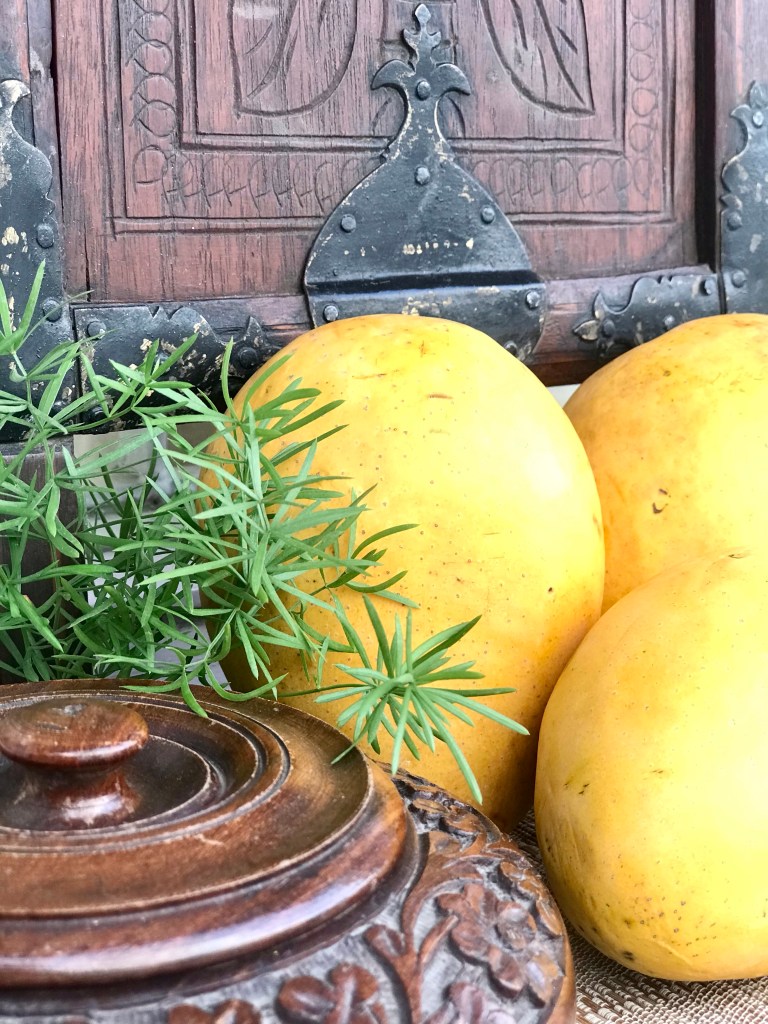
So, clearly it’s that time of the year when sun is very – very sunny. Drool for the pulpy – splashy yellow colour that satiates the taste buds…err…sorry – I meant the eyes! A friend of mine has a PhD in food processing something. You know she’s very intelligent. She told me that a new era has dawned for mango lovers, with the formation of chemical ‘X’ – perhaps, carbide calcium… calcium carbide something – any way the well read people call it chemical ‘X’. According to her, only those mangoes are the healthiest and tastiest those are cuddled and caressed with the love of chemical ‘X’.
Of course! The kind hearted woman that she is, she spread this word everywhere for the welfare of the people, by publishing her articles on the hot topic. I tell you this topic was much covered in almost all the national dailies. Certainly by the time mangoes arrived in the market, people were very well informed. They went in hordes to the vendors. How delicious the mangoes looked! Bright, beautiful and golden yellow with unique patches of green, unlike the monotonous blending of yellow and green (that’s so organic). Therefore, most of my friends had interesting stories to share.
Obviously since they had read the articles, they definitely had to go and buy those chemical ‘X’ kissed –other worldly pieces of work. So, one of them who has a big family told me that her father brought boxes of mangoes one day. The family had a lovely evening in their garden while enjoying the mangoes, dipped in the big buckets full of water. While relishing mangoes, not two or three but six or seven, her eldest aunt got so ecstatic that she ended up dancing high with blood pressure and spent the entire night under shower. Of course, so that she can save on bathing the next day and begin with her mango mania again. Such is the love!
Another one told me, yet more benefits of these new mangoes in the market. Since she was expecting her first child, she wanted to eat the healthiest fruits; and mangoes were her favourite. Her busy doctor was very strict about her eating habits and would monitor her babys health every month. And oh my! How my friend would always fret over getting appointments with her doctor. Since the doctor was so busy, she would keep my friend waiting for weeks. However, this time the miracle happened! After eating a few slices of mango, apparently the baby kicked the aamras out (I think in the form of a mucky material through the mouth) and my friend landed an appointment in the surgery, the very next hour. Such a help for getting appointments with the doctors!
For my concerned reader- she had a baby boy – he is fit and kick ass.
Last but not the least, when I was a kid, my maaliuncle told me while pruning the mango tree, that when Baabar came to India – he did not know how to eat mangoes. But when he tasted one, he fell for the charm of aamras and fell in the spring of never leaving India.
Well, I was just thinking… he should have rather tried the chemical ‘X’ ones!! Perhaps, a different spring would have emerged.
the pronunciation sneers have become a tell tale of people’s character, being and the many shades in between.
Being a creative writer it is but natural for me to observe people and places around me. And out of the many observations that I have made, there is a rather interesting one about sneers – a series of pronunciation sneers I would say, that have taken birth out of the British American pronunciation dichotomy since on one hand we deal with a colonial hangover, while on the other a Hollywood hangover. These hangovers reflect the great Indian tragicomedy aptly because neither the French would have replied nor the Irish would have served their coffee on being talked in English, but the Indian would have gladly jumped in a competition of spoken English (as much hilarious it might become at times!).However, over the years this did not stop the sneers to become the tell-tale of people’s character, being and the many shades in between.
So if you compliment a girl for the lovely flower on her dress with the British pronunciation of ‘flaa-vur’ and not the American ‘flaaa-r’ accent…oh boy! No matter even if you read at Eton in England she would still give you ‘educated from village school’ sneer. Well, that is your cue. She is certainly not the soul companion you’re looking for – get going.
Then there is the ‘confused kitty party’ sneer. It often happens over kitty parties when a lady from one corner of the table shares her tested and tried tomato soup recipe with the tomato being a British ‘tmaa-to’. While the American harbinger on the other end throws in few of her ‘tme-tos’ in the recipe and both the women end up thinking am I wrong or is she right? In such scenarios, it is best to let them stay confused.
Well then there is the ‘old school’ sneer. When over whiskey two men of different generations share the tales of the same boarding school they went to with one telling that the housemaster did not open the ‘on-ve-lopes’ (he grew up watching Hollywood) during their times. While the older one replies that his was a different era with no letter being passed without the housemaster opening the ‘en-veh-lope’ (making sure he emphasizes the ‘en’ of his envelope; he grew up watching BBC).
Of course, the most common is the ‘desperately wanting to speak in English’ sneer. So if you go to your doctor complaining phlegm (the ‘g’ is not very silent in American pronunciation; try speaking with ‘g’) in your chest he would definitely have a silent laugh in his head because he would think you are trying to throw in English words but know nothing. Not his fault! Most people in India pronounce it with a silent ‘g’. Thanks, to our education system that follows British norms of language.
And then finally, last but not the least, there is the ‘run away’ sneer. This sneer generally works the other way round with the speaker being sneered at because he or she is neither speaking British nor American. So when a haughty flashy person comes and flaunts his neon jacket telling you it’s a Givenchy (‘gee-van-chy’) instead of the French ‘zhu-vaun-shee’, you know it’s time to slip away!
Come September and we are at the cusp of festivity in India. The lovely curls of the athletic model on the glossy magazine cover, the futuristic angular sleeve dress worn at a sun downer or that Cleopatra gold shimmering eye make-up you saw your friend wear – all metamorphoses into Indie fusion festive trends in India around this corner of the year. So gaining inspiration from the Indian and International Fashion Week Runways 2021, here are 5 fashion trends to brush you up with, that are here to stay this festive season!
Color Code
Generally, the transition from summer to winter means saying goodbye to vibrant bold hues and hello to shades of blue, gray, green, brown and burgundy. Yet, this time bold monochromes with dash of sindhi gold will take festive wear by storm. “Colour Blocking will pick up attention in Indian wear. Having said that, butter cream and coconut cream for bridals and festive collection will rule the roost too this time” predict Chandigarh based fashion designers Navneet and Harpeet Toor of the Moods and Colours label.
Malaika Arora in a maroon Manish Malhotra piece at the Lakme Fashion Week 2021.
Floral Frenzy
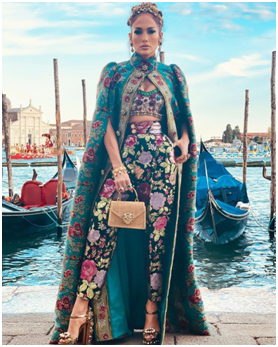
Not paisleys but florals will be the center stage this festive season. Florals with more saturated – muted tones with sequins and sparkle will be trending the Festive Look Book 2021. From Dolce and Gabbana to Abujani and Sandeep Khosla, all are digging in for florals in one way or the other because floral print is a trend that just won’t end.
Jennifer Lopez setting major floral goals in a Dolce & Gabbana ensemble.
Back to the Roots
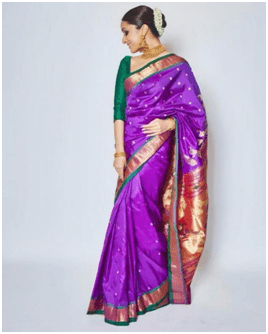
The covid pandemic has left an indelible imprint on the fashion industry, favourably spotlighting the trends that are more sustainable, conscious and rooted in traditions. Fast fashion has paved way for slow fashion which means limited but exclusive fashion pieces for the closet. So the pandemic can be credited with one good thing at least that the hand looms and works of traditional embroidery artisans are seeing the light of the day once again.
Shraddha Kapoor donning a handloom saree at a recent event.
Make Up alamode
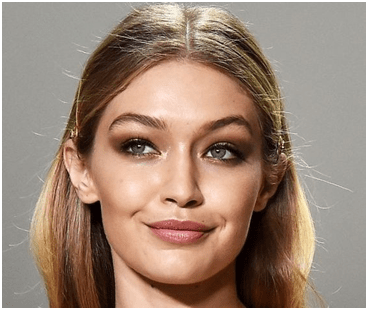
“Make up has been an ever evolving world of stains, colours and glitter. 2021 Festive season will also not be shy of experiments”, says Mumbai based make-up artist Ritika Cheema. “Dewy skin make up look for the face or nude soft tinted lips and cheeks with strong liner and mascara laden eyes are some of the looks that we should be prepared to see this festive season”, she further added. The romantic red pout with sheer skin or shades of pink – peach shadows with nude lips are some other make up trends to watch out for.
Dewy makeup never goes wrong. Gidi Hadid looking a dream vision.
Hair on Fleek
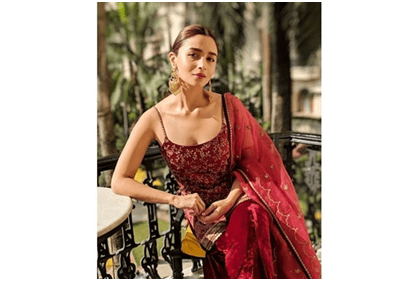
Festive season is always about renewal and our hair play a major role in setting any sort of new vibe one intends to don on. Bob cuts above shoulder level, fringes, 70’s flip hair are some hair trends that will rock on this time. According to the senior hair stylist at the Mohali based The Hair And Body Lounge, “Slick back combed hair is the perfect runway inspired look for this festive season but beach waves, face contouring highlights are equally trendy and in fashion these days for Indian party looks”.
Alia Bhatt in slicked back hair looks every bit a Diva!
The sedimented meaning of purple can be destabilised but it power and profoundness still stays.
When Kamala Devi Harris walked inside the Capitol, chin up, shoulders square with utmost grace alongside her husband Doug Emhoff for the US Presidential inauguration ceremony – the historic moment was made even more striking by her choice of Tyrian purple outfit that swayed the masses rekindling the rhetoric of purple.
The fashion diplomacy of purple interestingly has a mythological story to begin with when nymph named Tyrus subsequently asked the mighty God Heracles to make a garment of the colour that Heracles’s dog had smeared his face with on biting into a mollusk. It was the colour purple that the sea snail secreted. The colour was novel in its origin and exclusive in its access. Around two and a half lakh mollusks could hardly yield an ounce of usable dye. This gave it a regal reputation becoming the colour of high priests and royalty from Roman and Persian empires to the Japanese in the east who extracted purple from shigusa, a purple gromwell plant which is equally difficult to grow.
In spite, of purple’s association with royalty, the meaning and perception of purple is a cultural construct and is very contextual. In Thailand and South America (particularly Brazil), purple is the colour of mourning and grief. Purple is also considered a jinxed colour to date in many regions across the world, associating it with mystery and magic. No wonder why in antiquity oracle of Delphi had a purple veil as mentioned by authors like Aristotle and Ovid. While, in United States Purple Heart is given to the soldiers wounded or killed in war as a military decoration but more to show love and compassion and when Alice Paul started and unionized the Woman Suffrage Procession in Washington D.C. in 1913, purple came to symbolize the “color of loyalty, constancy to purpose, unswerving steadfastness to a cause,” and “the royal blood that flows in the veins of every suffragette, the instinct of freedom and dignity”. While Alice Walker, winner of Pulitzer Prize for her outstanding book ‘The Color Purple’ bestowed saturated purple (the one Kamala Harris chose to wear) a more intense and classic meaning that represented the mature and wiser ‘womanism’ which is in contrast to the delicate feminism represented by colour lavender. Thus the royal purple began to symbolize freedom, resilience and transformation of marginalized women (black women in particular) who have been obliterated from history.
Therefore, purple has no fixed signified meaning but endlessly differs and defers with ‘supplementarity’ and ‘traces’. It is indeed a sign of a sign of yet another sign quite literally too. In Old English purpre described the royal purple clothing of an emperor. It has been derived from the Latin purpura which in turn was derived from the Greek porphura denoting the mollusks that yielded the crimson dye. According to the dictionary meaning, purple can be defined in two ways, i.e, as a group of colours with a hue between that of violet and red and as a cloth of colour between violet and red which is worn as a symbol of royalty or high office. This leads to various concepts leading from one signified to the other. For instance, ‘purple prose’ is used for exaggerated and elaborate writings; ‘purple cow’ for something remarkable and unique; ‘purple speech’ for profane and bad language and ‘purple haze’ for confusion induced by drugs.
Indeed, this colour creates confusion enough by leading to the knowledge of unthought-of-thoughts just like when we realize in the end that PURPLE is not a colour at all. Scientifically, purple is not a colour since there is no beam of pure light that looks purple. Our eyes see purple because they are tricked to believe it so. It is a secondary colour that is obtained by mixing the blue and red. However, it is precisely this reason that also makes purple special in spiritual realms, thereby, associating it with creativity, imagination and high minded spirituality. It is believed that purple is the only colour that is profound enough to engulf and balance the calm stability of blue and fierce energy of red.
Although the sedimented meaning and symbolism of purple can be destabilized further and further but its power and profoundness stays even when deconstructed to smithereens. No wonder, Kamala chose this colour whose power cannot be pinned down, that refuses to fit in a typecast and that which broke the glass ceiling.
On a lighter note, looks like Kamala and all the other powerful ladies also knew how best to tell their nation that it is high time for the red of republicans and blue of democrats to work together, to genuinely make America great again after the veritable cyclone of Trumpism has been over now.
2020 has left a scary impression on the collective conscious of humankind. As New Year is around the corner, it’s time to step up with hope, optimism and lessons learnt from 2020 to glide in next year like a pro. Here is what the mind and body health professionals have to say about the lessons learnt during this unprecedented year and their expert advice to make your 2021 better.
Heidi E. Spear
Author, Meditation teacher and Energy wellness instructor based in California
Her books ‘Ayurveda Made Easy’ and ‘My Pocket Chakra Healing’ are published by Simon & Schuster.
As a meditation teacher, what do you think is the main challenge in recalibrating people after the damage of 2020?
As a meditation teacher, my focus is to help people meet the moment where it is and from where they are, with compassionate awareness. 2020 has been hard on mostly everyone not only for how they and their loved ones have been impacted, but also (due to human empathy and our energetic connection) for how they feel about the toll it has taken on everyone: their neighbors, the healthcare workers, and even people they don’t know throughout the world. What we need to do, even as we are still in the midst of what began in 2020, is to learn and consistently practice meditation so that we can move through our feelings in healthy ways. The challenge comes when we look outside for others to fix things; we have to realize we each have a unique role to play in life as part of the collective whole. Self compassion and compassion for others is the key.
What are the lessons or reflections you have gained from your profession and as an individual during this pandemic?
There have been countless lessons I have gained from my profession and as an individual during this pandemic. The one that is on my mind most often is that – crises heighten both the positive and the negative in ourselves and in our society which allows us to give it all a closer look and make better choices. Remember that choices don’t only refer to our actions. They refer to what we think, say, and do. Every thought, word, and deed effects our lives and contributes to the energetic and evolution of our world. This pandemic has shown how powerful human connection truly is. Just as important is noticing where we can improve; we also must have and share gratitude for the positive aspects we see in ourselves, in others, and in our world. Then, we move forward with compassion in our choices. It just has to happen step-by-step.
What advice would you give to make 2021 a better year?
My advice to make 2021 a better year would be first to notice all the good that came out of 2020 for you. 2020 has been extremely challenging. Finding gratitude can help you cultivate hope and resilience. Meditation is important because it takes us to a place where we can find gratitude and where we can assess and refuel our energy. From there, we know what we need, we can learn to show up well for ourselves and others and we will be able to see all the good that is happening alongside suffering. Seeing the good in ourselves and others and being grateful helps stay afloat. We can do this! I believe in wisdom, in love, and in the warmth of human heart: and this is the space where we need to continue to reside.
Dr. Amanjot Sandhu
Medical doctor based in London
(MBBS, MRCGP)
How do you think 2020 has affected the mindset of medical health professionals?
2020 has been a challenging year from medical perspective. We have been practicing telephone triage in England for a long time now but it is now accepted as the main form of patient care. Hot hubs were quickly set up in areas where suspected covid patients were triaged and accordingly further care was decided. Hospitals did have coping issues as well and as a result special units were set up here. However, there were issues of staffing and equipment. We have lost a lot of doctors, friends and family members due to this virus. It has certainly affected mental health globally. Overall this has been a very challenging year for medical professionals and is continuing to be. But I would say this has made us stronger, resilient and taught us a lot of things on how to be prepared for future.
What are the lessons you have gained as a doctor during this pandemic?
Viruses are highly infective organisms and have a capacity to mutate fast. For instance the influenza pandemic of 1918 lasted more than 2 years until a vaccine was formed and we still get a wave every year. Vulnerable patients need to be vaccinated each year against the active strain even now. We can have more viruses like this and covid could be one as well. The medical community has realized the need to have a proper strategy to fight any such future pandemic. Quick and effective measure will be required as compared to this time. Public health needs to be more proactive and plan on this from now onwards.
What advice would you give to make 2021 a better year?
Personal hygiene (hand washing, mouth covering) social distancing, self isolation and good ventilation are key to tackle any infections. I believe these should be followed in future and forever.
Anjashi Sarkar
Motivation and Manifestation Coach, Counselor based in Delhi
Miranda House alumni, PhD from Jamia Millia Islamia University
Author of ‘Voicing Contentious Silences: Other Narratives on History and Society’,
‘Sectarian Politics in North Bengal and North East India’
‘Transformation Targets: Your Pocket Fitbook’
Which prime psychological and behavioral issue you observed in 2020?
Almost 90 percent of people who I have mentored have abandonment issues. That being said, it is not uncommon to find individuals resorting to immoral practices, having frivolous relationships, etc. just to seek validation or to be accepted in a group. There is also a constant indecisiveness when it comes to personal relationships. Again there is lack of consistency (in work) in most people; out of the 53 cases I came across, I found 37-38 people complaining that they have no idea if they’d be able to continue the momentum. They ‘think so’ and that is the problem.
What are the lessons you have gained from your field of work during this pandemic?
I was able to begin sessions immediately after the lockdown was announced. There was a time I had been in the same position as the people I have been helping. My biggest takeaway of 2020 is- -if you are able to inspire people enough, if you’re able to make them realize their true potential, that is undoubtedly a big win. And if you can make them eradicate their fears and allow them to become more compassionate, help them re-evaluate definitions of love and humanity, everyone can motivate themselves enough and help others heal too. For me, I don’t see people as good or bad anymore; I view them as healed or unhealed.
What advice would you give for a smooth glide in 2021?
While 2020 showed us the mirror – taught us the value of food, money, shelter and made us connect with our family more, 2021 could bring a lot of abundance if one takes a lesson from the past and begins working on their mindset. Instead of being reactive, one may choose to be responsive. That should serve most of our purposes since presumptions have mainly been the reasons behind conflict. Everyone counts, every mind counts, every opinion counts, all things matter but little patience, mindfulness, lot more love and compassion, and a bit of empathy have the power to change the world.
Dr. Parvati Halbe
Pediatrician based in Pune, Maharashtra
(MBBS, MD)
What was the main concern of parents you encountered in 2020? Was there any child development issue because of the pandemic and social isolation?
In the initial phase of pandemic, in the year 2020, as everyone was shocked and scared, parents were more cautious about the health of their young ones. The vaccine issue has been in the discussion since last couple of months. For all age groups in my clients (children brought to me), I have come across problems due to lack of exposure and schools being shut for a very long time. Kids were found lagging in speech development. Some developed wrong habit of watching videos on mobile after the online classes. Their food habits got deranged. Sleep patterns changed and even led to insomnia in some school going children. Adolescent group showed lack of energy in studying and extracurricular activities remained out of reach which also contributed to excessive weight gain in some.
What are the lessons or reflections you have gained from your profession and as an individual during this pandemic?
Fearful it was last year, 2020, no doubt. But one has to start thinking in broader aspect of humankind – inclusive of other lives on the planet Earth. Implementing our simple guidelines to protect our environment can reduce the further scary situation in future. 2020 has made me reflect on our deteriorating natural resources. We need to look at them in a more responsible manner and use them wisely to spare them for future generations.
What advice would you give to parents and others alike for making 2021 a better year?
Though younger population is spared much from the disease, it is facing side effects of the measures taken to control the disease. I would advise parents should take this opportunity to bond well with children and work on building a healthy lifestyle. Involve children in other healthy exercises at home. Sharing daily chores with them can be an interactive activity. There should be more thought sharing as well as passing experience based knowledge to them.
Amreen Sekhon
Former Consultant Clinical Psychologist at Apollo
Special Educator Counsellor at Strawberry Fields High School, Chandigarh
Ph.D in Psychology
Which mental health issue has been predominant according to you in 2020?
According to a survey done by the University of Exeter in the year 2020, a fifth of people reported having experienced mental health issues and a third people having felt isolated due to the pandemic. The current outbreak has revealed the psychological makeup of the society. Major depressive disorder has been predominant in this year.
What are the lessons or reflections you have gained from your profession and as an individual during this pandemic?
Some of the lessons learnt during this year have been that do not personalize an experience (rather) have self compassion. The current situation is being faced by entire humankind. Hence, do not stop your life and wait for things to fall back in place. Instead, make the best of the time in hand. Secondly, mental illness is not a sign of one’s weaknesses and one should not have to deal it alone. Talk about your mental health and seek help if necessary.
What advice would you give to make 2021 a better year for mental health?
Exercise regularly and practice habits that you thoroughly enjoy and find relaxing. Keep up with your daily routine as much as possible. Have a schedule. Shift your current narrative, focus on the positive. Seek credible information and help when necessary. It is also important to stay connected with your family and friends always.



 Harleen Gurunay Majithia