NUGGETS of LIFE: Amid bits and bytes, listen to the eco beep

There is a whirlwind around each one of us; a whirlwind of 0s and 1s with a thundering vortex of beeps and bangs

My daughter would not eat without watching her favourite cartoon show. On days she would not sleep without listening to the soft symphonies of nature with birds chirping in the background that I often play on my mobile. When she dozes off and I turn off that music, a guilt stings me. We have transitioned from a generation who would casually listen to the birds singing in our gardens and backyards while doing our daily chores to a generation that experiences it in a secondhand recorded way of bits and bytes.

The truth is inspite of having all the luxuries and comforts of technology, the next generation of humankind is perhaps the farthest from the more powerful and real luxury and charm of pristine nature. There is a whirlwind around each one of us; a whirlwind of 0s and 1s with a thundering vortex of beeps and bangs. The problem is that we’ve got so used to it that we do not realize we are not immune to it. Somewhere along that road, we have stopped listening to the eco beep – the symptoms and alarm of our degrading environment. More so, we have also stopped addressing the vitality of our own entire being.

Rather than working on our inner being, we are working too much on the outside on our planet. Little more done and we will come crashing down with a grim scenario already predicted by the central agencies with no groundwater in the next 20 years in many regions. With species facing extinction, mountains blasted and dissected for commercial projects and catastrophic global warming, the time for words is over now. It’s reached a point where substantial action is required at each individual level.

We have been bitten and bitten quite badly by the snake of rampant consumerism whose venom irrespective of our efforts is spreading slowly. If we introspect our daily habits it comes down to a two-step capsule – use and discard. Every time a new phone comes in the market, everyone wants to devour the latest and discard the well functioning old one. Interestingly, these tech friendly fads have market strategies as their bedrock that drives us to decide unconsciously in almost all the matters. It is an issue we do not want to address. Today, we are relying so much on technology from tracking the time to the security of our bank accounts, that there are too many loose ends that can be threatening.

However, there is another truth we can’t dust of, and that is, we can’t really give up our mobile phones and technology in its various forms. It cannot be done certainly! The tech-world and science have a pertinent place in history as well as in making our daily lives better. They deserve credit, but the point is atleast we should be cautious of becoming the new Don Quixote – living a life of illusion, self created problems and staying stuck in a virtual world bereft of reality.

Alteast, we should not forget the art of living in the moment and connecting with nature. Perhaps, we have forgotten precisely that but time is passing by and a cure is needed because at the end would we have the luxury of an author to correct the faults of his first draft?

I don’t think so.

Published in Hindustan Times on 27.9.2019
OPINION: A Full Circle View of Post Covid-19 World

We are too close to the details to see the bigger picture, while the large volume of prevalent information becomes merely reporatge.

The coronavirus pandemic is still unfolding but one thing is sure that there will be dramatic and strategic shifts while the world walks through the dark valley. But is this simply a new wave – an upgradation, or are we in the eye of the storm? An abyss of concentrated power which will eventually create a furore in all the areas of human existence from business world to geopolitics, social life to the virtual world – each inseparably linked to the other…

The Universe is always expanding and collapsing. And then from a collapse it re – expands. This is the process of creation and history stands witness to this fact that the world pattern similarly has always been that of ebb and flow. There are peaceful times and then there are times when the pressure of events sets in. We are too close to the details to see the bigger picture, while the large volume of prevalent information becomes merely reportage. In the face of such events, the course of history changes and coronavirus pandemic is one such event.

The trends likely to rise in the post covid-19 world are much discernable now, in the second half of 2020. It is not merely a new wave leading to the next level, where Khyber knife makes way for sophisticated weaponry. There is a new business climate trying to emerge from a moribund economy. The businesses have accelerated their digital transformation but they are far from overcoming all their problems. The onset of monopolistic behavior with supersized deals taking place, thereby concentrating bigger corporates who already have had a better access to the capital market, clearly forecast a much tougher time for smaller businesses to come out of the freeze. An accelerated digital transformation for these bigger corporations in turn primarily means enhanced “surveillance capitalism”, making the  states more in sync with such deals since it would be in their interest– giving a more potential rise to ‘Cambridge Analytica’ like cases.

The governments across the globe have already begun their shift to self sufficiency and wider digital reach amongst its citizens. Coronavirus pandemic has further led to increased use of digital tools of organic marketing, whereby the global population is also more receptive to such approach than ever before.  With state initiatives tapping social media platforms for outreach, there is now higher risk for general population to not being able to decipher the targeted content contextualized into their lives through such platforms. Now, with globalization being threatened and weak global entities leading to political compromises, there is less gainful competition and lesser choices, and higher threat to social and mental well being.

It is to be pointed out here that in this scenario a new trend is also subtly taking birth. It cannot be ignored that globalization is threatened but it is also certain that it cannot come to an abrupt halt. On the other hand nations have begun developing notable individual cultures and started their self sufficient projections but it is a long way to go before this complete self sufficiency comes into existence for all nations, if at all. But somewhere in between this wide disparity in projections and the reality, a consolidation of political and economic power has begun, making use of this fall out. A trend giving birth to oligopolies and endangering democracies.

If this becomes the eye of the storm, to point out metaphorically – the coriolis effect would further bellow the ‘epidemic of despair’. There is already much less discussion on mental health despite a spike in number of suicides in this pandemic. Unlike the business world, no model or strategy is being devised to curb this angle of the crisis. If this is left unattended it can lead to higher discontent, rage, unrest and depression leading to faulty decision making capability at individual level; and as a collective society. Even if the world comes out with a vaccine by the end of this year and there is a respite in the panic and anxiety due to covid-19, will mass vaccination be possible? Especially for the under privileged in any country – with World Health Organization’s “Solidarity Call to Action” not being supported by majority governments and pharmaceutical companies across the globe – it is long way to go.

At this time when the repercussions of the pandemic are still emerging, there can be no conclusions but only questions. There is much needed to be read in between the lines, than what the eyes can read. There will certainly be higher incidents of social and economic partiality and polarizations with a serious mental health crisis looming above.

 A safety buffer zone should be created by smaller businesses by coming together forming a pool which is not just fiscal in nature but also source of creativity and innovation to preserve their long term growth. It is not how quickly new technologies are adopted but how dedicated you are in maintaining the customer loyalty. As the world is going through the current storm, it is important to be aware and resist any autocratic surveillance empowered by artificial intelligence in the virtual world. And last but not the least, if the sense of fear arising from your current circumstances is imprisoning the mind – remember to first survive and then thrive, because future is always a notion and not reality that is created partly by circumstances and partly by faith in yourself. And faith, can move mountains as they say!

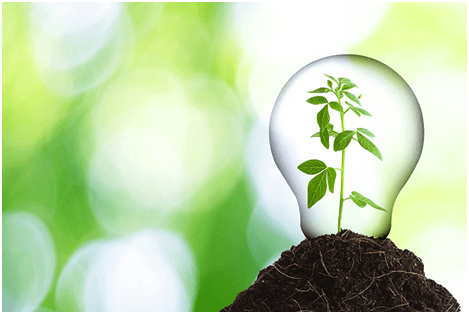
SUNDAY FEATURE: Go Creative, Go Green

It is time to step up into a conscious living but with a twist of creativity.

Nature is an oasis of tranquility, beauty and rejuvenation. It has given us uncountable gifts from its healing power to everyday goods that make our life comfortable. But what have humans done in return? Humans have looted the very life source and plundered the dexterous working mechanism of our Mother Earth.

 It is certainly the time to get into action for bringing a change. There are many remedial measures being suggested but until and unless we accept these from within us, they would hardly serve as a solution to the countless environmental catastrophes! The time for discussions is over. It is time to step up into a conscious living but with a twist of creativity.

We generally underestimate the power of creativity that can make something out of nothing. Creativity can turn a simple idea into a great novelty and a dull school routine into the best thing an educationist ever did!

It is creativity that subtly forces out of the box thinking (and to be scientifically precise it is the right side of our brain responsible for this magical skill!), thereby directing our mind into unexplored positivity and possibility. We need it in our daily attitudes, approaches, theories, campaigns and initiatives of saving environment. John Cleese, the famous English actor and comedian, had once rightly remarked that creativity is not a talent but the way of operating.

 So here are some creative, fascinating, quirky and imaginative ‘trash to treasure’ converting formulas that each and every one of us should adopt – each day every day!

  • THEME IT ECO STYLE!

When it comes to styling your rooms and lounges, the primary concern is to create an aura that is de-stressing and comforting. One thing is for sure – nothing can calm down the nerve better than the relaxing vibe of a natural theme. And what’s better about it is that you can go the DIY way, making it easy on the pocket as well as the environment. There are a plethora of things you can do with almost any disposed off material. The empty jam jars can be used for decorating your outdoors with scented candles. You can also plant some flowers in a group of bulbs and hang them on a tree in your garden or in your balcony. You can also make miniatures, photo frames and showpieces from old newspapers and cardboard for your childs room. From crockery and bathroom fittings, wooden boxes, wine bottles, tins, old magazines to the embroidery on your suits and sarees – everything can be used to do up your place in the most economical and eco friendly way.

  • THE PLASTIC MANIA

The plastic bags and products are the worst enemies of nature all across the globe! So learn to unleash your vibrant and creative mind to make use of plastic products that would otherwise only add to the garbage heaps. The noted designer Clement had introduced stylish tote bags, made by weaving several plastic bags together, in the fashion industry long time back. Well, why can’t we make DIY products from plastic bags then? We can certainly make beautiful baskets, door mats and attractive African styled ‘Inkuku’ chairs by weaving plastic bags in a basic framework – just needs a little patience!

  • THE ECO-FASHION

With increasing awareness regarding environment degradation due to unchecked human activity, the world of fashion has apparently changed its gear for the better. From international designers like Stella McCartney, Mark Liu to Desi designers and fashionistas like Sonam kapoor and Dia Mirza, all have been zealously promoting eco-friendly collections. So the next time you buy a fabric – say no to synthetics and polyester and give a thumbs up to pure fabrics like organic silk and khadi. Ask your local boutiques to use and promote organic dyes instead of chemical dyes and bleaches. Try to mix and match things. You can make a really cool outfit from your old military or floral bedsheets! It not only encourages the creativity in you but also helps in keeping the environment greener.

  • THE MYSTICAL SOUP!

Before allowing good food to spoil, allow your belly to enjoy it. As they say, wasting food is like saving every dime to have a ride of hell. So even if you have leftovers and vegetables in your refrigerator, who are getting tired and old but haven’t yet given up – cook them into a delicious soup right away! You can use leftovers like herbs, pieces of meat, bits of bread, pieces of cheese and lots more. Use your magical mind to explore various recipes of soups from different leftovers or waste ingredients that have been still stocked up in your cooling box since the last weekend! It would be quite an experience.

It is time to do our bit, at individual and collective level. The GO-CREATIVE, GO-GREEN approach does not tax your resources in any way, rather encourages the creativity in you. Martin Luther King Jr. once said, “Almost always the creative dedicated minority has made the world better.” Only this time the minority should turn into the world majority.

Published in The Post India (thepostindia.co.in) on 1/8/2020

NUGGETS of LIFE: Living the virtual life, courtesy corona

At last, humankind has realised how vulnerable it can be

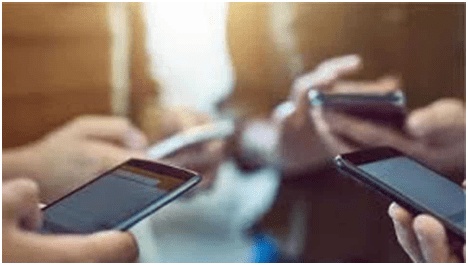
“It’s interesting how Corona has shifted the entire world to live virtually in real time and finally the revelation has happened”, I said looking up from my phone.

“Throw some light…”- came the swift inquisition from my husband who had his eyes racing across the news bulletin for quite sometime until now.

I went on rambling in my mind about how human lifestyles had become too fast paced to be lived efficiently and without a warm sense of hygge (coziness) as Danish would put it.

Until, came Corona and everything got bombarded in a lockdown – but for everyone’s good I’d say.

My husband now looked up at me sensing the silence and awaiting me to illustrate my statement. So I began.

“You see earlier the spicy gossips that happened over cards and kitty parties have now switched over to online Ludo games and WhatsApp groups. Similarly, when poori-chana were made on Sundays – close friends were invited over brunch, or the home baked cakes were shared over tea or coffee. Now they are shared on Instagram.”

“Now this sharing doesn’t lead to any olfactory satisfaction amongst friends in reality but since these turn into popular internet trends, so the poor things have to keep up with it – whether they like it or not”, I went on.

“Hmm, so it’s like I shared my cake now you share yours”, added my husband as my kiddo raced across.

“And just look at the change in the lives of all the kids! How happy they are with their virtual classes but they miss their friends terribly and evenings turn into drama parties for parents to handle. Yet there are many children across the country that do not have access to computers and sadly are also missing out the meal provided at school. There will be consequences of schools being shut down for so long.”

My husband looked thoughtful now. “You’re right! It won’t be easy to bridge the gap of holistic learning and of course deal the screen addiction.”

“Yes, so…there are also people posting pictures of working from home – on their laptops with a cup of black tea by their side – telling tales of how happy they are of this new trend of virtual offices across IT sector, while others are complaining how monotonous it is to work from home!”

“And by the way everyone has started to read newspapers online these days. It’s all getting digitized and techy I tell you. At least many trees would be saved.”

My husband shook his head in disagreement: “Dearest you would be flooded with fake news and targeted with algorithms if all you do is read from online portals. It would be no good for our society to completely do away with traditional print media.”

“But in between what is the big revelation?” he asked in a serious tone zooming back to my first statement.

I turned to look him full in the face – “At last humankind has realized how vulnerable it can be.”

Published in Hindustan Times on 11/6/2020

OPINION: The Digital Advertising Market in India post Covid-19

The industry of advertisement has been in service since the time of classics. From the drumming of town criers to the revolution of printing, the arena of advertisement has evolved to a new phase, namely, digitization – where time and distance hold no substance. And in the troubling times of covid-19 it has not only become the most wide reaching medium but also the most powerful in creating strong audience impressions.

A common metric for what a digital advertisement is that it is a media that does not merely involve dissemination of information and persuasion like its predecessors, but also stimulation of public demand through online campaigns, search engine optimization, social networking sites, viral advertising, e-mail and mobile marketing, blogs, pop ups and the list is endless. Its accuracy of measurement to track viewership through ‘hits’, ‘likes’ and ‘click throughs’ also render it much success similar to a proper feedback in a successful communication, thereby helping in market research and surveys. The search engines match the interests and topics of the browser with the targeted advertising without the browser realizing it. It effortlessly contextualizes the advertisement and seeps into the lives of its market audience.

It has been rightly observed that audience influences the media, and the media influences the audience. This observation has never been truer than in times of covid-19 when lockdowns have led to major lifestyle resets, especially in India which saw one of the most stringent lockdowns in the world. Although the Indian lifestyle had changed long ago, creating new demands that in turn led to further technological prowess in the country. The boom in telecom industry in this country has been extraordinary lately.  An enormous market in India has been created, first by making smart phones within the reach of common man and second by providing better internet speed. The 3Gs and the 4Gs have in turn given tremendous impetus to the digital advertising sector which further impacts the huge population, or it can be said, the market audience in the country. A report by Dentsu Aegis Network has stated that the media and advertising industry is shifting at a rapid speed and digital is certainly taking charge with a growth rate at 27% in 2020. It is to be noted here that post covid-19 this growth rate is very likely to increase manifold.

The topic of tussle is that to what extent digital advertising will be successful in Indian market given that the majority population of the country lives in remote rural areas and lacks data infrastructure. However, notwithstanding, the whole situation can also be looked from an optimistic angle. The increased availability of internet and smart phones in the recent past, combined with the new adoption of local language in technology has only increased the number of rural users, thereby creating more business. India has begun to change its digital narrative from the ground level itself, as can be observed in Indian governments ‘Digital India’ initiative and the recent demonetization which rather pushed the country for a digital up-gradation with people adopting and adapting online medium over the traditional ways. This has also turned out to be of immense help in the distressing times of covid-19 pandemic.

In the end, it is worth keeping in mind that digital advertising market in India is not solely about technology but also sociology. It is undeniable that a huge digital market awaits to be tapped in this country. Covid-19 has sadly but certainly opened a gateway for major new digital advertising trends that can take over India drastically. It is now only a matter of how it is optimized and utilized.

THE GREY ZONE

The future of digital advertising market in India post covid-19 certainly has potential but it also raises some pertinent issues since India is a developing nation.

Mental Health: By working on the notion of selling the consumer to the product than the product to the consumer, it can lead to higher discontent in a society that is already going through a mental health challenge in these tough times.

Managing Perception:  When a large amount of information is fed and not merely dispensed, it is in other words – creation of a perception that can be managed by various digital tools. This can have serious repercussions since majority population of the country is rural and is primarily educated at a basic level. They would not be able to skeptically view or identify the sophisticated organic digital marketing.

Young Market Audience:  Even if the lack of data infrastructure in remote rural areas is completely met with, there would still be a major task of spreading awareness about various digital medium to safeguard especially the young market audience from falling prey to online rumors, fake news and suicidal mind games that often make way through digital advertising.

Published in The Post India (thepostindia.co.in) on 20/7/2020

SUNDAY FEATURE: Palampur – An Enthralling Getaway

The land where sparkling streams and brooks adorn the green carpeted landscape, giving way to spectacular views of the mighty Dhauladhars overlooking the lush green tea gardens, is none other than the alluring Palampur – literally meaning the land of abundant water!

The Tea Capital

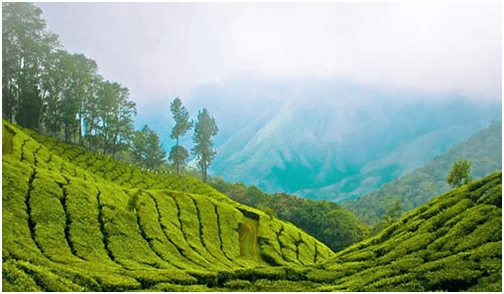
Situated in the Kangra Valley of Himachal Pradesh this British tea plant legacy is also known as ‘The Tea Capital of Northwest India’ and is world famous for its ‘Kangra Tea’! Palampur offers you the exquisite experience of strolling and feasting your eyes at the lush green tea gardens all around. The air drips of sensuous aroma of the tea leaves while pine trees render it a relaxing and a rejuvenating quality. One can enjoy time at the Bundla Tea Co-operative or observe tea making process at the Palampur Tea Co-operative.                    

Tea garden in Palampur

People of Palampur are warm and friendly. They celebrate the local festival of Sair with much ecstasy and enthusiasm. The legend has it that worshiping the Shair deity during the Sair Festival protects the region from heavy rains and crop failure, bringing prosperity to the region (and Palampur is indeed one of the most developing and economically thriving regions of Himachal Pradesh!).

 Apart from the exotic tea, the local food is no less tempting! The Khatti Dal, Mithe Chawal and Chooar Ka Raya excite one’s palate. The ayurvedic treatments at Palampur are also popular.

Artist’s Delight!

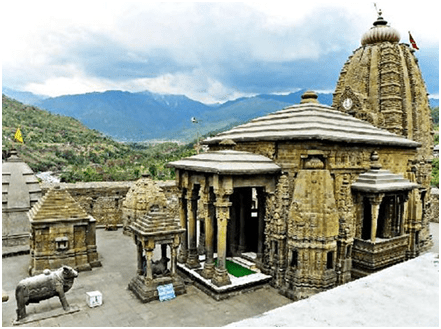
About 13kms from Palampur is the serene village of Andretta. It is an artists’ village which was once the home for the painter Sobha Singh and playwright Norah Richards. The Sobha Singh Art Gallery and the Andretta Pottery House are quiet a mosaic of art and culture. Another remarkable monument is the 1200 years old Mahadev temple at Baijnath near Palampur.


Mahadev Temple

The Shikahra style architecture and the fine sculpture are prolific in its own kind! The ‘Shivratri Festival’ held there is a well attended fair with people coming in from across the country. Another peculiar thing about Baijnath, as locals told, is that people here worship Ravana for his superb intelligence and knowledge!

The Adrenaline Rush

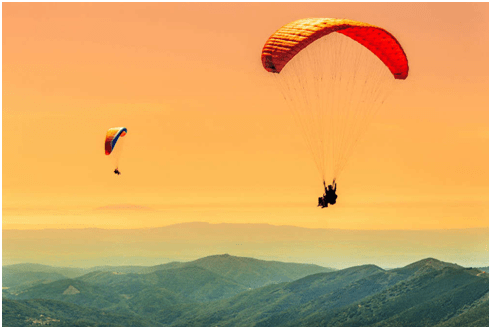
For those who want sheer adventure- Bir and Billing are the ideal places. They are approximately 35 kms from Palampur and are known well for paragliding and hang-gliding. Every year Himachal Pradesh government conducts International Paragliding Competition at Bir-Billing.

Paragliding at Bir – Billing

Treks can be made from Palampur towards Chamba which are fascinating and easy. A short trek can also be made to Neugal Khad on the periphery of the town which is an awe-inspiring chasm. The more tough treks are from Sanghar Pass to Bharmaur via Holi and from Baijnath over the Jarser pass to Bharmaur.

Other places to see nearby…

  • The Saurabh Van Vihar, in the vicinity of the Neugal Khad is a well preserved natural park – ideal for picnics!
  • The Taragarh Palace which was  once the summer palace of the last Maharaja of Jammu and Kashmir is worth visiting. It is now a luxury hotel.
  • The Tashijong monastery near Taragarh is also very impressive.
  •  The monolithic rock cut temples at Masroor, about 40kms from Palampur, are a stunning architectural piece of art.
  • The temples of Jawalamukhi and Chamunda Devi are popular pilgrimage centres.
  • The Kangra Fort located on the outskirts of the town of Kangra makes one walk through the walls of history.
  • The Kangra Toy Train journey to Palampur is also a great experience with beautiful views to lay your eyes on!

FACT FILE

How to reach:

 Palampur is well connected by all means of transportation. The Kangra airport is just 40 kms from Palampur. The nearest railway station is at Maranda which is about 3 kms from the main bus stand. Palampur is 254kms from Chandigarh via Pathankot by road.

Where to stay:

There are many hotels and resorts in Palampur to stay in.

Climate:

The mild climate makes Palampur a comfy zone for every tourist.

Best time to visit:

Palampur can be visited throughout the year but the best time would be from March to June and mid September to November.

Published in Identity India in its August 2013 issue